For anyone tracking internal data, managing specific organ workloads, or maintaining lean muscle mass, these small legumes punch far above their weight.
When we look at optimize-level nutrition, consistency always beats erratic intensity. Eating green peas three to four times a week isn’t just adding a side dish to your plate; it is a systematic intervention in your metabolic, digestive, and cellular pathways.
1. The Amino Acid Architecture: Bypassing the Liver
When you consume protein, your body breaks it down into amino acids. However, not all proteins are processed the same way. Traditional animal proteins place a heavy metabolic tax on the liver, requiring intensive transamination and processing through the urea cycle. If the liver is compromised or working under a high workload, this processing can lead to an accumulation of toxic byproducts like ammonia.
Green peas offer a clean workaround. They are exceptionally rich in Branched-Chain Amino Acids (BCAAs)—specifically leucine, isoleucine, and valine.
- The Muscle Bypass: Unlike other amino acids, BCAAs bypass hepatic (liver) metabolism almost entirely. Instead, they are routed directly to skeletal muscle, where they are utilized for energy and protein synthesis.
- Countering Sarcopenia: For anyone focusing on long-distance endurance or managing chronic health conditions where muscle wasting (sarcopenia) is a threat, this direct routing is critical. It allows you to maintain lean muscle mass without overloading central metabolic organs.
- The Nitrogen Balance: By utilizing plant-derived BCAAs 3–4 times a week, you stabilize your body’s nitrogen balance efficiently, providing fuel for repair mechanisms while keeping metabolic stress low.
2. The Gut-Liver Axis and Toxin Management
Your digestive tract and your liver exist in a continuous feedback loop via the portal vein. What happens in the gut directly dictates the workload of your internal filtration systems.
Peas are a dual-threat asset here because of their high concentration of soluble and insoluble dietary fiber (roughly 8 to 9 grams per cup).
- Accelerated Intestinal Transit: Insoluble fiber acts as physical bulk, optimizing motility. This prevents sluggish digestion and stasis, reducing the amount of time waste sits in your colon.
- The Ammonia Reduction Mechanism: When waste moves slowly, gut bacteria ferment it, generating ammonia and other neurotoxins. By consuming peas frequently, you keep the tract moving, drastically reducing the baseline production of these toxins. This prevents them from migrating through the intestinal barrier into the bloodstream, protecting cognitive clarity and overall systemic health.
- Microbiome Diversification: Soluble fiber acts as a prebiotic, feeding specific beneficial strains like Bacteroidetes. These microbes produce short-chain fatty acids (SCFAs), which repair the gut lining and lower systemic inflammation.
3. Precision Micronutrients and Fluid Balance
From a data perspective, look at what one cup of cooked green peas delivers to your cellular infrastructure:
| Nutrient | Yield per Cooked Cup | Primary Systemic Function |
| Protein | 8.6 g | Muscle preservation, tissue repair |
| Fiber | 8.8 g | Gut motility, toxin clearance, SCFA production |
| Sodium | ~5 mg | Zero-tier fluid management, blood pressure stability |
| Vitamin K | ~40% DV | Coagulation cascade support, bone matrix density |
| Thiamine (B1) | ~35% DV | Cellular energy conversion, neural signaling |
| Vitamin C | ~25% DV | Antioxidant defense, collagen synthesis |
Strict Fluid and Sodium Control
For anyone tracking blood pressure or managing vascular fluid retention, the sodium-to-potassium ratio in whole foods is non-negotiable. Processed foods and animal products frequently carry hidden sodium loads that stress the kidneys and cause fluid shifts.
Green peas are naturally near-zero sodium (~5 mg per cup) while delivering a solid baseline of potassium. Eating them multiple times a week helps stabilize osmotic pressure across cell membranes, keeping fluid where it belongs (inside the cells) rather than pooling in interstitial spaces.
Cellular Oxidation Defense
The deep green hue of pea skins comes from concentrated polyphenols and carotenoids (like lutein and zeaxanthin). Introducing these compounds into your system every 48 to 72 hours provides steady antioxidant coverage. They neutralize free radicals directly within the liver tissue and vascular walls, mitigating the chronic inflammatory processes that lead to cellular scarring and tissue fibrosis.
The Verdict
Incorporating green peas into your routine 3–4 times a week is a pragmatic, high-efficiency dietary strategy. You are delivering a highly bioavailable package of plant-based protein that respects your body’s processing limits, safeguards your muscle mass, accelerates intestinal clearing, and maintains pristine fluid balance. It is a clean, data-backed addition to an intentional nutritional framework.
Eating green peas 3–4 times a week has a direct, mechanical impact on your lipid profile. It targets cholesterol via two distinct pathways: trapping it in the digestive tract and forcing your system to clear circulating LDL (low-density lipoprotein) without adding metabolic stress.
Here is exactly how that frequency alters your cholesterol chemistry.
1. The Bile Acid Trap (Soluble Fiber Mechanism)
The liver uses cholesterol to produce bile acids, which are essential for digesting fats. Under normal circumstances, these bile acids are recycled back to the liver through the gut.
Green peas disrupt this recycling loop using high-density soluble fiber:
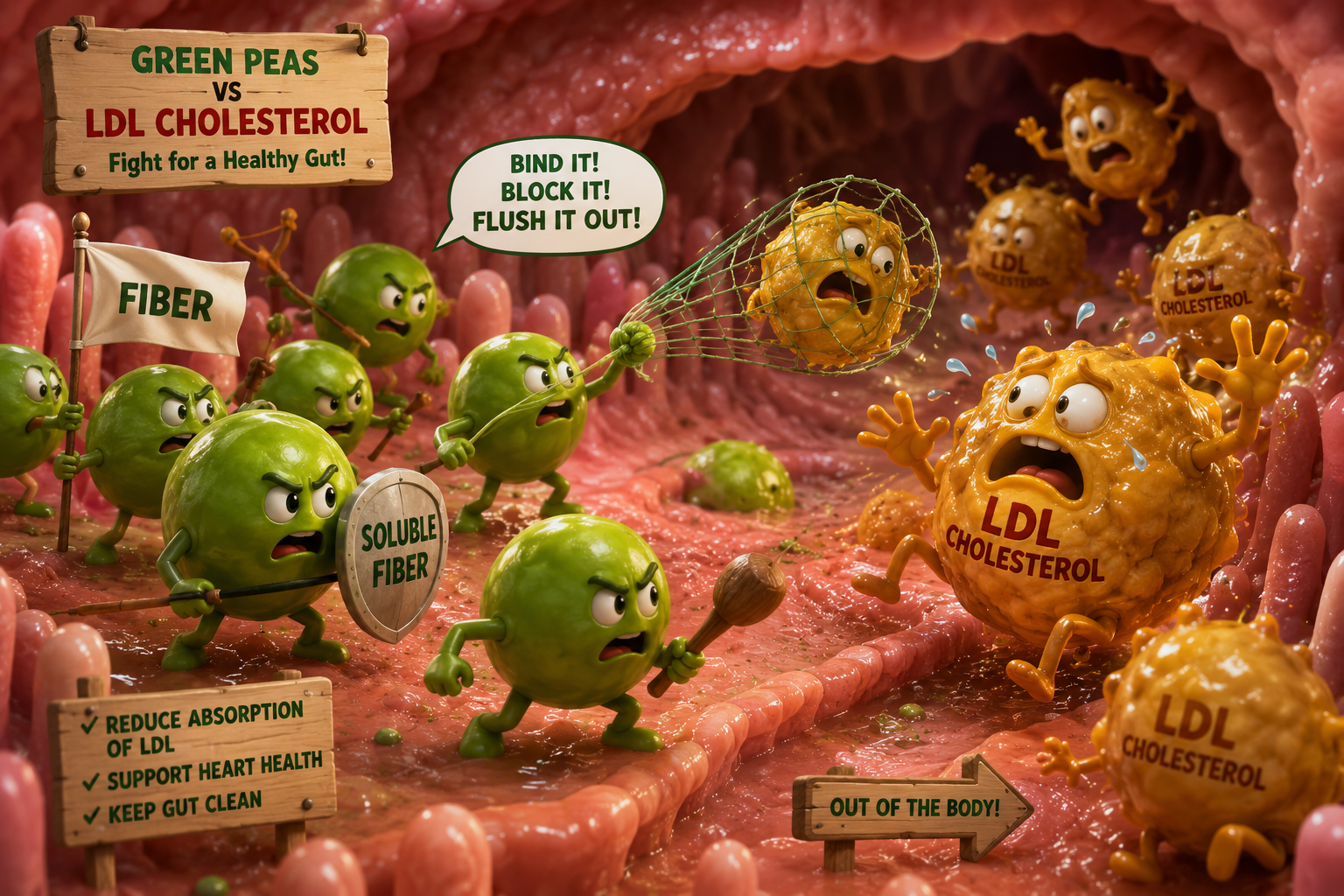
- Binding in the Gut: The soluble fiber in peas forms a gel-like matrix in the small intestine. This gel physically binds to bile acids, trapping them.
- Forced Elimination: Instead of being reabsorbed, these trapped bile acids are excreted from the body.
- The Regeneration Phase: To make up for the loss, the liver is forced to manufacture brand-new bile acids. To do this, it must harvest raw materials—specifically LDL cholesterol—directly from your bloodstream.
By eating peas every 48 to 72 hours, you create a continuous clearance cycle, steadily lowering circulating LDL levels.
2. Phytosterols: Blocking Absorption at the Gate
Peas contain natural plant compounds called phytosterols. Structurally, phytosterols look almost identical to dietary cholesterol.
[Gut Receptors] <--- Phytosterols (Blocks the gate)
                X--- Dietary Cholesterol (Excreted)
[Gut Receptors] <--- Phytosterols (Blocks the gate)
X--- Detary Cholesterol (Excreted)
When you eat peas frequently, these plant sterols compete with cholesterol for absorption sites in your intestinal wall. Because phytosterols lock into those receptors first, a significant portion of the cholesterol from your other food choices cannot be absorbed and is simply flushed out of your system.
3. Easing the Hepatic Clearance Load
Managing cholesterol isn’t just about the numbers on a blood test; it’s about reducing the processing burden on your liver cells (hepatocytes).
When circulating LDL remains chronically high, the liver has to work overtime to clear it via LDL receptors. If liver function is already optimized or facing a high workload due to tissue damage or cirrhosis, overloading it with dense fats and high LDL exacerbates fat accumulation (steatosis) within the liver itself.
By using green peas to block cholesterol absorption in the gut and eliminate bile acids through the stool, you are essentially outsourcing the cleanup work to your digestive tract. This keeps blood lipids in a manageable range without forcing a compromised or hard-working liver to process heavy metabolic debris.
The result of this 3–4 times a week routine is a cleaner lipid profile, lower systemic vascular stress, and a significantly reduced workload on your liver’s filtration mechanisms.